


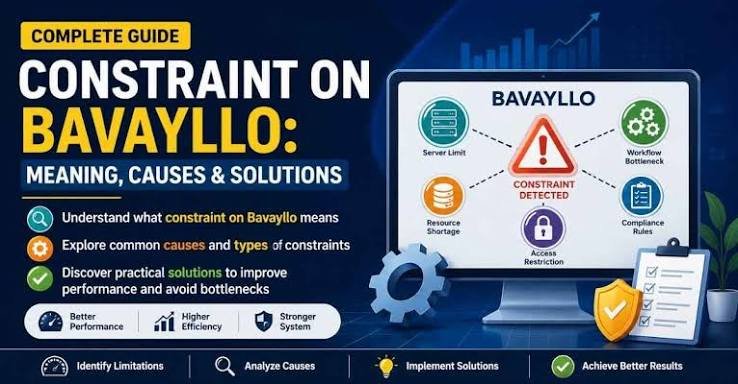
When people search for constraint on Bavayllo, they are usually trying to understand what limitations, rules, or restrictions are connected with Bavayllo. The word “constraint” simply means a condition that controls, limits, or guides how something works. In many digital environments, constraints are created to maintain security, improve performance, and make sure users follow specific rules.
The exact meaning of a Bavayllo constraint depends on the context in which Bavayllo is being used. A constraint could refer to a technical restriction, an account limitation, a usage rule, or a condition that affects what users can do. Understanding these limits helps users avoid confusion and use a system more effectively.
In simple words, a constraint is like a boundary. Just as traffic rules control how vehicles move safely on roads, digital constraints control how users interact with online platforms, applications, or services.
“Constraints are not always obstacles. In many systems, they create structure, safety, and better performance.”
| Topic | Explanation |
|---|---|
| Main keyword | Constraint on Bavayllo |
| Meaning | A restriction, rule, or condition affecting usage |
| Purpose | To control access, improve security, and maintain quality |
| Common areas | Technology, platforms, accounts, and user features |
| User benefit | Better understanding and smoother experience |
Understanding the Basic Idea Behind Bavayllo Constraint
A Bavayllo constraint can be understood by looking at how modern systems operate. Most platforms cannot provide unlimited access without certain controls. They need boundaries to manage resources, protect users, and prevent misuse. These boundaries are what we commonly call constraints.
For example, an online service may limit the number of actions a user can perform within a specific period. This is not necessarily a negative thing. Such limitations can prevent system overload and ensure that every user receives a stable experience.
The idea behind constraints is not to stop users from achieving their goals. Instead, constraints help create a balanced environment where the system remains reliable. Without proper restrictions, platforms can face problems such as security risks, poor performance, or unfair usage.
Why Understanding Constraint on Bavayllo Matters
Understanding constraint on Bavayllo is important because users often experience limitations without knowing the reason behind them. When a feature is unavailable, access is restricted, or an action cannot be completed, the cause may be related to a built-in constraint.
Knowing how constraints work allows users to make better decisions. Instead of seeing every restriction as a problem, users can understand whether it exists for security, technical, or policy reasons.
Some common reasons users need to understand constraints include:
- Knowing what features are available
- Avoiding unexpected limitations
- Improving the way they use a platform
- Finding better solutions when restrictions affect their goals
A clear understanding of constraints creates a better relationship between users and technology. It helps people work with systems instead of struggling against them.
Understanding the Meaning of Bavayllo Constraint
The meaning of constraint on Bavayllo becomes easier to understand when we look at the general idea of constraints in digital systems and everyday processes. A constraint is not always a problem or a barrier. In many cases, it is a planned rule that helps a system operate correctly. Technology platforms, websites, applications, and online services often use constraints to control resources, protect information, and create a better experience for users.
A Bavayllo constraint can represent any type of limitation that affects how something works. It may control access, available features, user actions, or system behavior. These restrictions are usually created because every system has limits. A platform has limited storage, processing power, security requirements, and operational rules that must be managed carefully.
For example, imagine a website that allows thousands of users to interact at the same time. Without certain limits, one user could consume too many resources and affect everyone else. A constraint helps prevent this situation by creating a balanced environment where resources are shared fairly.
What Does Constraint Mean in Different Contexts?
The word constraint can have different meanings depending on the situation. Although the basic idea remains the same, its purpose changes depending on where it is applied.
In technology, a constraint usually refers to a technical or operational limit. Software systems often have restrictions that control how data is processed, how many users can access a feature, or what actions are allowed.
In business, constraints may relate to budgets, deadlines, resources, or company policies. Businesses use constraints to make realistic plans and manage available resources effectively.
In online platforms, constraints are often connected with user activity. These may include account rules, feature availability, security checks, or usage limits.
| Area | Example of Constraint | Purpose |
|---|---|---|
| Technology | Limited system capacity | Maintain performance |
| Online platforms | Usage restrictions | Prevent misuse |
| Business | Budget limits | Control spending |
| Security | Access permissions | Protect information |
Understanding these different meanings helps explain why a constraint on Bavayllo may exist and how it influences user experiences.
How the Term “Constraint on Bavayllo” Is Used
People searching for Bavayllo constraint meaning are often looking for an explanation of why certain restrictions exist. They may want to know whether a limitation is temporary, permanent, technical, or related to platform rules.
The term can create questions such as:
- Why is there a constraint on Bavayllo?
- What does this restriction affect?
- Can users work within these limitations?
- Are these constraints designed for security or performance?
These questions are common because users want transparency. When people understand why a limitation exists, they are more likely to use a system correctly.
A good system does not simply add restrictions without purpose. Effective constraints are carefully designed to solve specific problems. They help maintain stability while still allowing users to complete important tasks.
Constraint vs Limitation: Are They the Same?
Many people use the words constraint and limitation as if they have the same meaning. While they are closely related, there is a small difference between them.
A limitation usually describes something that reduces ability or capacity. It focuses on what cannot be done or what is unavailable.
A constraint is more focused on a rule, condition, or factor that controls how something happens. A constraint may exist because there is a limitation, but it can also be intentionally created for safety or organization.
| Term | Meaning | Simple Example |
|---|---|---|
| Constraint | A rule or condition that controls actions | A platform allows only verified users to access certain features |
| Limitation | A reduced ability or capacity | A free account has fewer available features |
For constraint on Bavayllo, the difference is important because not every restriction means something is wrong. Some constraints are created to improve reliability and protect the overall system.
Why Do Constraints Exist on Bavayllo?
Protecting System Security and Stability
One of the biggest reasons a constraint on Bavayllo may exist is security. Modern digital systems face many risks, including misuse, unauthorized access, and excessive resource consumption. Constraints help create protective boundaries that reduce these risks.
For example, a platform may limit certain actions until a user completes verification. This type of restriction helps confirm that accounts belong to real users and reduces harmful activity.
Security-based constraints are common across many digital services. They help protect both the platform and the people using it.
Interesting fact: Many large online platforms use automated systems that analyze user behavior and apply temporary restrictions when unusual activity is detected. These systems help prevent attacks and maintain safer digital environments.
Improving User Experience
Although constraints may seem restrictive, they can actually improve the user experience. A system without rules can become unreliable, slow, or difficult to manage.
Imagine an online platform where every user could perform unlimited actions at the same time. The system could become overloaded, causing delays for everyone. A reasonable constraint helps maintain speed and reliability.
Good constraints create balance. They allow users to access important features while protecting the platform from unnecessary pressure.
Some benefits of user-focused constraints include:
- Faster system performance
- More reliable services
- Better resource management
- Reduced technical problems
The goal is not to block users but to create a smoother experience.
Maintaining Rules and Quality Standards
Another reason behind Bavayllo constraints is maintaining quality. Platforms often have guidelines that define acceptable usage. These rules help create a consistent environment for all users.
Quality-based constraints may control things such as:
- Content standards
- User behavior
- Feature access
- Data handling
- Account permissions
Without these rules, platforms may become difficult to manage. Constraints provide structure and help ensure that users receive a predictable experience.
A useful way to think about constraints is that they act like guidelines. They define the boundaries while still allowing users to achieve their goals.
Common Types of Constraints on Bavayllo
Access and Account Constraints
Access constraints control who can use certain features or services. Many digital platforms apply these restrictions to protect users and maintain security.
Examples may include:
- Account verification requirements
- Different permission levels
- Restricted features for new users
- Login security checks
These types of constraints are common because platforms need to confirm user identity and protect sensitive information.
Usage and Feature Constraints
Usage constraints control how frequently or extensively users can access specific functions. These limits are often connected with system capacity.
For example, a service may limit:
- Number of requests
- Available tools
- Storage capacity
- Daily activity levels
These restrictions help prevent overuse and keep services available for everyone.
Technical Constraints
Technical constraints are related to the way a system is built. Every digital platform has technical boundaries because hardware, software, and network resources are not unlimited.
Technical constraints may include:
| Technical Area | Possible Constraint |
|---|---|
| Storage | Maximum amount of saved data |
| Processing | Limited computing capacity |
| Compatibility | Support for specific devices or systems |
| Network | Connection and speed requirements |
Understanding technical constraints helps users know why certain features may work differently under different conditions.
Policy and Rule-Based Constraints
Policy constraints come from guidelines created by platform owners or administrators. These rules define how the service should be used.
They may exist to:
- Protect users
- Maintain fairness
- Follow legal requirements
- Prevent harmful activities
Policy constraints are important because they create a safer and more organized environment.
How Constraints Affect Users and Performance
Positive Effects of Constraints
A constraint on Bavayllo can provide several benefits when it is designed properly. Restrictions often improve the overall quality of a system.
Positive effects include:
| Benefit | How It Helps |
|---|---|
| Better security | Protects user information |
| Improved stability | Prevents system overload |
| Fair usage | Allows equal access |
| Higher quality | Maintains standards |
Constraints are most effective when they are clear, reasonable, and explained properly to users.
Challenges Caused by Constraints
Even useful constraints can sometimes create difficulties. Users may feel frustrated when they cannot complete an action or access a feature they need.
Common challenges include:
- Reduced flexibility
- Limited options
- Extra verification steps
- Slower completion of tasks
The important point is understanding whether the restriction is temporary, necessary, or something that can be improved.
A good platform should balance protection with convenience. Too many restrictions can create a poor experience, while too few restrictions can create security and performance problems.
Read more:How to Fix Bug on EveBioHazTech: Easy Solutions That Actually Work
