


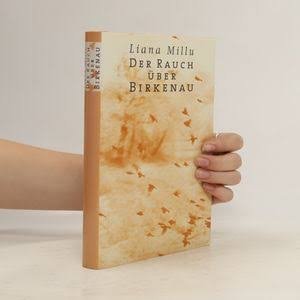
Rauch über Birkenau is Liana Millu’s account of women imprisoned at Auschwitz-Birkenau.
Its six connected stories reveal how persecution invaded every human relationship.
At a Glance
| Detail | Verified information |
|---|---|
| German title | Der Rauch über Birkenau |
| Original title | Il fumo di Birkenau |
| Author | Liana Millu |
| Original language | Italian |
| First published | 1947 |
| Literary form | Six connected testimonial stories |
| Historical setting | Auschwitz II-Birkenau |
| German translator | Hinrich Schmidt-Henkel |
| German edition | Kunstmann, 1997; later Fischer editions |
| Central focus | Women’s experiences, survival, family, dignity |
| Notable foreword | Primo Levi |
| English title | Smoke over Birkenau |
Book details vary between editions. For example, the 1997 German edition contains 192 pages. A later Fischer edition lists 189 pages. These differences reflect formatting, not different narratives. Google Books confirms the translator and Fischer edition details.
What Is Rauch über Birkenau About?
Rauch über Birkenau records six women’s experiences inside Birkenau. Millu appears as a witness, yet rarely claims centre stage. Instead, she preserves the lives of women around her.
The stories examine pregnancy, motherhood, hunger, jealousy, sexuality, loyalty, and grief. These themes are not side issues. They show how camp violence reached beyond forced labour. It also attacked family ties, bodily autonomy, and personal identity.
The Italian publisher Giuntina describes the work as six stories. Each explores specifically female dimensions of imprisonment. Its current Italian edition also carries Primo Levi’s foreword. Giuntina identifies the book as a major European testimony about Birkenau’s women’s camp.
Who Was Liana Millu?
Liana Millu was born in Pisa on December 21, 1914. She became a teacher and journalist before Italy entered its darkest period. Antisemitic laws increasingly restricted Jewish citizens after 1938.
Millu joined the Italian Resistance during 1943. German forces arrested her in 1944. She was then deported to Auschwitz-Birkenau. Northwestern University Press confirms her work as a teacher, journalist, and partisan. Northwestern University Press
After surviving deportation, Millu returned to Italy. She continued writing and speaking about persecution. She died in Genoa on February 6, 2005. The Auschwitz-Birkenau State Museum confirms her birth, death, and professional background. Auschwitz-Birkenau Memorial
Her prisoner number was A-5384. It later appeared in the title of Dopo il fumo. That separate work expands upon her deportation and its aftermath. The United States Holocaust Memorial Museum catalogs this publication under her name and prisoner number.
Six Stories, Six Forms of Captivity
The book does not follow a conventional autobiography. Instead, each narrative studies a different moral crisis. Together, they create a collective portrait.
| Story | Central figure | Main conflict |
|---|---|---|
| Lily Marleen | Lily | Beauty, jealousy, and lethal camp power |
| Clandestina | Maria | A concealed pregnancy inside Birkenau |
| Alta tensione | Bruna | A mother’s separation from her son |
| Il biglietto da cinque rubli | Zina | Grief, memory, and a dangerous rescue |
| Fifth narrative | Two sisters | Survival, shame, and divided loyalties |
| L’ardua sentenza | Lise | Hunger versus marital fidelity |
These are not detached character sketches. Every decision occurs under coercion. Food, work assignments, protection, and intimacy become survival currencies.
That distinction matters. Ordinary moral judgments cannot explain choices made under systematic starvation. Millu shows prisoners facing options designed to destroy them. The stories therefore resist simple labels like courage, weakness, or betrayal.
The book’s six-story form and its central women are documented by Encyclopedia.com. Some editions translate story titles differently.
Why Millu Keeps Herself in the Background
The book’s most distinctive feature is its restrained narrator. Millu witnessed the camp, but she redirects attention toward others. That choice separates her work from a straightforward survival memoir.
Her narrative method achieves three things:
- It gives lost prisoners an individual presence.
- It creates a wider portrait of women’s imprisonment.
- It prevents survival from becoming one heroic storyline.
Academic analysis describes Millu’s narrator as deliberately secondary. The six women carry the main dramatic weight. Maria Baiardi’s study also dates the manuscript’s completion to spring 1946.
This structure creates an ethical effect. Millu survived, but the book does not treat survival as proof of superiority. Chance, labour assignments, physical condition, and other prisoners shaped every outcome.
The Female Experience Is Central
Many early camp accounts emphasized administration, forced labour, selections, and death. Millu includes those realities. However, she also examines experiences often missing from early male-authored testimony.
Pregnancy becomes a concealed death sentence. Motherhood creates unbearable vulnerability. Sexual exploitation divides prisoners while sustaining others. Clothing and remembered beauty preserve fragments of identity.
Primo Levi considered Millu’s focus especially important. Giuntina’s edition uses his foreword and highlights the women’s “minimal and desperate” camp existence. Giuntina
The Auschwitz-Birkenau Memorial also uses Millu’s testimony in educational material about women prisoners. Her work appears within lessons about labour, culture, and religious life. Auschwitz Memorial education resource
Testimony, Literature, or Both?
Calling the book fiction can mislead readers. Calling it only documentary can also limit it. Millu shaped witnessed experiences through scenes, dialogue, tension, and recurring symbols.
The work therefore sits between testimony and literary storytelling. Its people face historically grounded camp conditions. Yet Millu arranges their experiences into carefully structured narratives.
That method does not weaken the testimony. It makes individual consequences understandable. Statistics document the Holocaust’s scale. Millu’s stories reveal what persecution did to one friendship, pregnancy, marriage, or family.
The United States Holocaust Memorial Museum catalog classifies the English edition among Holocaust personal narratives. Northwestern University Press presents it as stories about women who suffered beside Millu.
Do Not Confuse Two Similar Books
A common search error deserves clarification. Liana Millu’s Der Rauch über Birkenau is not Seweryna Szmaglewska’s similarly titled work.
| Author | Original title | First publication |
|---|---|---|
| Liana Millu | Il fumo di Birkenau | Italy, 1947 |
| Seweryna Szmaglewska | Dymy nad Birkenau | Poland, 1945 |
Both authors survived Birkenau. Both wrote important early testimonies. However, their books are separate works with different structures.
Millu’s book contains six women-centred narratives. Szmaglewska’s work offers a broader autobiographical account. Checking the author’s name prevents incorrect attribution.
Publication and Translation History
The original Italian book appeared in 1947. This placed Millu among Italy’s earliest Jewish deportee-authors. The Auschwitz Memorial recommends it as an account published shortly after the war. Auschwitz Memorial
The German Kunstmann edition appeared in 1997. Hinrich Schmidt-Henkel translated it. Fischer later issued the book in paperback. The 1999 Fischer edition contains 189 pages and ISBN 978-3-596-14021-3. Google Books
Lynne Sharon Schwartz translated the English edition. That translation received the PEN Renato Poggioli Translation Award. Northwestern University Press currently publishes it as Smoke over Birkenau.
Why Rauch über Birkenau Still Matters
The book preserves experiences easily hidden by broad historical summaries. It shows that persecution worked through both institutions and relationships. Camp authority manipulated hunger, fear, affection, and shame.
Millu offers no comfortable survival formula. Good decisions do not guarantee safety. Compromise does not always prevent death. Love can sustain someone, yet also increase danger.
That unresolved complexity gives the book lasting value. It asks readers to witness before judging. More importantly, it restores names, choices, and emotions to people targeted for erasure.
Final Assessment
Rauch über Birkenau is brief but emotionally demanding. Its power comes from precision, restraint, and multiple viewpoints. Millu documents women without turning their suffering into spectacle.
Readers seeking a conventional autobiography may find its structure unexpected. However, that structure is the book’s greatest strength. Millu transforms one survivor’s memory into a shared memorial for many women.
Read more:Melanie Amann verlässt den Spiegel: Ihr Wechsel zu Funke erklärt
